Low Porosity Hair: What It Means and How to Keep It Moisturized
You deep condition, you use a leave-in, you seal with a cream — and your hair still feels dry an hour later. Products seem to sit on top of your strands instead of sinking in. Wash day takes forever because your hair won't get fully wet, then takes even longer to dry.
If that sounds familiar, you may have low porosity hair. The good news: once you understand how it works, keeping it moisturized gets a lot easier.
What Is Low Porosity Hair?
Porosity describes how easily your hair absorbs and holds on to moisture. It comes down to the cuticle — the outer layer of each strand, made of tiny overlapping scales.
In low porosity hair, those scales lie flat and tightly packed. That makes it hard for water and products to get in. Once moisture is inside, though, it tends to stay there. So the challenge isn't keeping moisture in — it's getting it in to begin with.
Porosity has nothing to do with curl pattern. You can have low porosity waves, curls, or coils — from 2A to 4C. It's mostly genetic, though heat, color, and chemical treatments can raise porosity over time.
Signs You Have Low Porosity Hair
- Water beads up on your hair instead of soaking in
- Your hair takes a long time to get fully wet — and a long time to air dry
- Products leave a film or residue, or build up quickly
- Heavy butters and oils make your hair feel greasy but not moisturized
- Your hair feels dry even right after conditioning
You may have heard of the "float test" — dropping a strand in a glass of water to see if it sinks. It's popular, but not very reliable, since oils and products on the strand change the result. How your hair behaves on wash day is a much better guide.
How to Moisturize Low Porosity Hair
1. Start with clean hair
Because low porosity hair holds on to buildup, products can't reach the strand if there's a layer of old product in the way. A cleansing, sulfate-free shampoo every wash day — and a clarifying wash every few weeks if you use a lot of stylers — keeps the path clear. Our Avocado & Honey Moisture Repair Shampoo is a cleansing formula that removes buildup without stripping.
2. Use warmth to your advantage
Gentle heat helps the cuticle lift so conditioner can get in. Wash with warm (not hot) water, and when you deep condition, cover your hair with a plastic cap and sit under a hooded dryer or wrap a warm towel over it for 15–20 minutes. Steam works too.
3. Apply products to damp hair
Low porosity hair absorbs best when it's already damp. Apply your leave-in and stylers right after washing, section by section, instead of waiting until your hair has partly dried.
4. Lead with water-based products
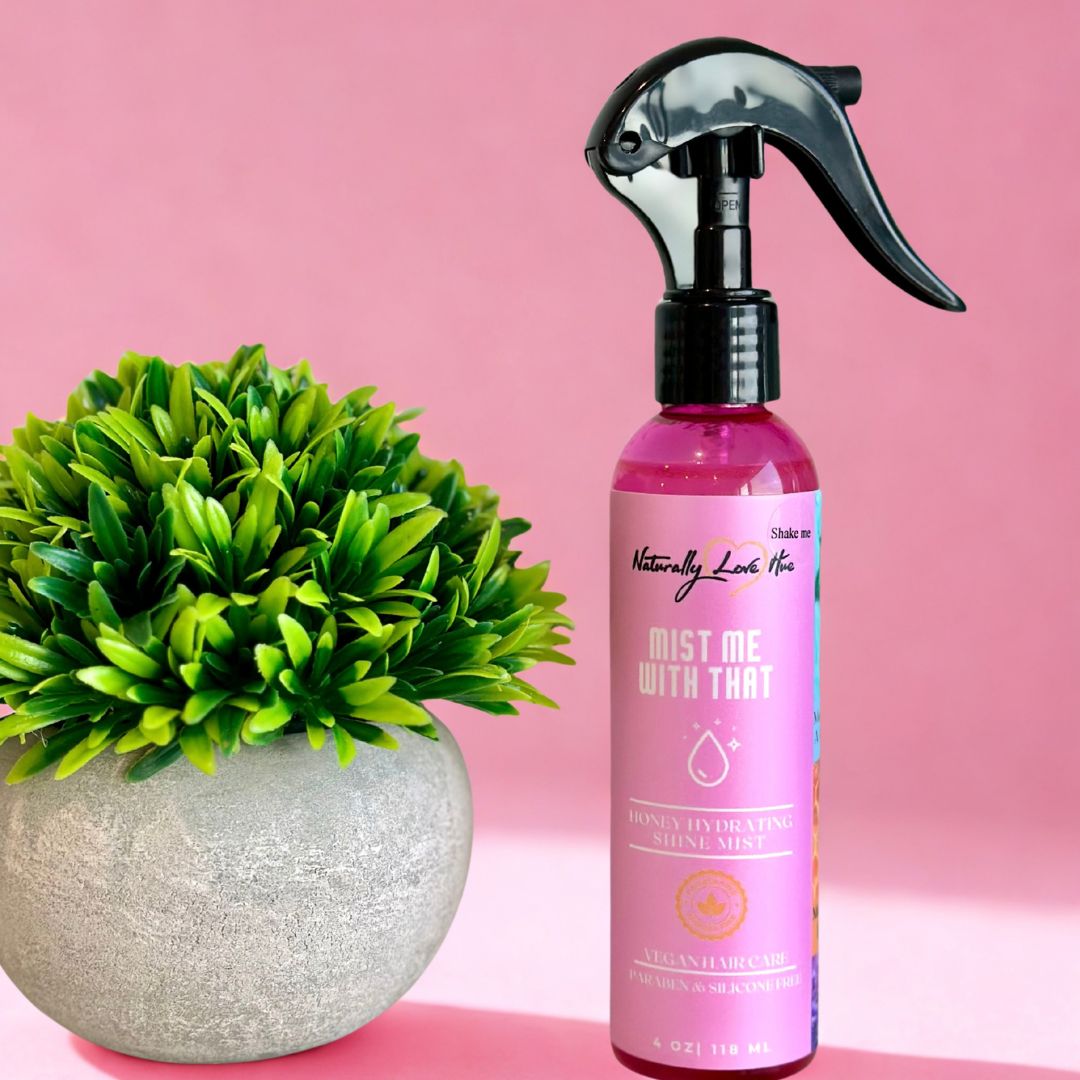
Water is the only thing that truly moisturizes hair — oils and butters seal moisture in. Start with a water-based leave-in or mist so there's moisture to seal. Ingredients like aloe vera, honey, and glycerin attract water to the strand, which is exactly what low porosity hair needs. Mist Me With That is aloe- and honey-based and light enough to use daily without buildup.
5. Choose lighter oils
Heavy oils like castor can sit on top of low porosity hair. Lighter oils — argan, grapeseed, jojoba, and sweet almond — absorb more easily and seal without the greasy feel.
6. Use less product than you think
More product doesn't mean more moisture when your hair can only absorb so much. Start with a small amount, work it through thoroughly, and add more only if you need it. With a richer cream like our Almond & Honey Daily Moisturizing Butter Cream, a little goes a long way — focus it on your ends.
7. Refresh with water, not more product
Between wash days, a light mist of water or a water-based spray will revive your hair better than piling on another layer of cream.
A Simple Low Porosity Wash Day Routine
- Cleanse with warm water and a sulfate-free shampoo.
- Deep condition with a plastic cap and gentle heat for 15–20 minutes.
- Rinse with lukewarm water.
- Apply a water-based leave-in to soaking-wet or damp hair.
- Seal with a small amount of light oil or cream on the ends.
- Style and let dry — diffusing on low heat can speed things up.
Common Mistakes to Avoid
- Layering heavy butters on dry hair — they'll sit on top and attract buildup
- Skipping clarifying for months at a time
- Applying stylers to dry hair and expecting them to absorb
- Using too many products at once — a leave-in plus one sealer is often enough
Low Porosity Hair FAQ
Can low porosity hair change?
Your natural porosity is largely genetic, but heat styling, bleaching, and chemical treatments can raise it over time. Protecting your hair from damage helps it stay the way it is.
How often should I wash low porosity hair?
Most people do well washing every 5–7 days. Because low porosity hair is prone to buildup, going much longer can leave it feeling coated and dry.
Is protein bad for low porosity hair?
Not necessarily, but low porosity hair can feel stiff if it gets too much protein. If your hair starts feeling hard or straw-like, ease up on protein-heavy treatments and focus on moisture.
Should I use the LOC or LCO method?
Many people with low porosity hair prefer LCO (liquid, cream, oil) or simply a liquid and a cream. Putting oil before cream can create a barrier that keeps the cream from absorbing.
The Bottom Line
Low porosity hair isn't hard to moisturize — it just needs the right approach. Keep it clean, use gentle warmth, apply water-based products to damp hair, and go light on heavy oils and butters. Once moisture gets in, your hair will hold on to it.
Not sure where to start? Try pairing Mist Me With That with our Almond & Honey Butter Cream for lightweight, lasting moisture.