High Porosity Hair: How to Lock In Moisture
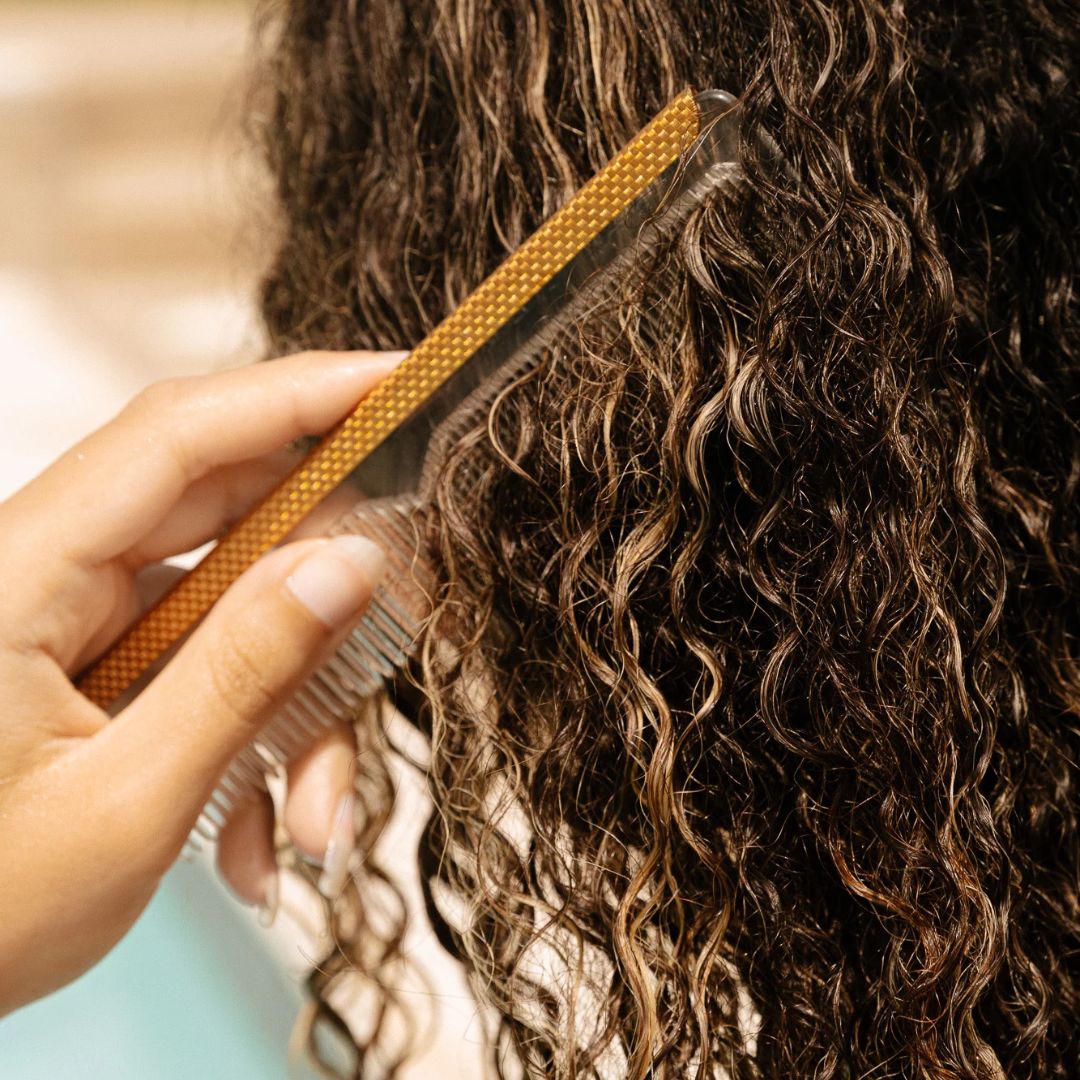
You moisturize on wash day and your hair feels soft and bouncy. By the next morning, it's dry, frizzy, and tangled again. Products soak in almost instantly, your hair dries in what feels like minutes, and your ends snap more easily than you'd like.
If that sounds like your hair, you may have high porosity hair. It drinks up moisture fast, but it lets it go just as quickly. The fix isn't more product. It's a routine built to lock moisture in once it gets there.
What Is High Porosity Hair?
Porosity describes how easily your hair absorbs and holds on to moisture. It comes down to the cuticle, the outer layer of each strand, which is made of tiny overlapping scales.
In high porosity hair, those scales are raised, uneven, or have gaps between them. Water and products slip in easily, and that's the upside. The downside is that moisture slips right back out, so your hair can go from hydrated to parched in a day.
Porosity has nothing to do with curl pattern. You can have high porosity waves, curls, or coils, anywhere from 2A to 4C. Some people are born with it, but it's often caused or made worse by heat styling, bleaching, color, relaxers, rough detangling, and sun exposure.
Signs You Have High Porosity Hair
- Your hair gets wet almost instantly and air dries very quickly
- It feels moisturized right after wash day, then dry again within a day or two
- Frizz shows up easily, especially in humid weather
- Your ends feel rough, tangle often, or break easily
- Your hair soaks up product and seems to "ask" for more
The popular "float test" (dropping a strand in water) isn't very reliable, since oils and product residue change the result. How your hair behaves on wash day and the days after is a better guide.
How to Lock In Moisture in High Porosity Hair
1. Deep condition every wash day
High porosity hair benefits from regular deep conditioning to smooth and soften the strand. Look for masks that combine moisture with strengthening ingredients. Our Anti-Breakage Deep Repair Mask is made with banana, oat protein, castor oil, and pro-vitamin B5, and it gives plenty of slip for detangling while it works to reduce breakage.
2. Don't fear protein (in balance)
Where low porosity hair can get stiff from too much protein, high porosity hair often loves it. Protein helps fill in weak spots along the strand so it holds moisture better and feels stronger. Balance is still key: if your hair starts feeling hard or straw-like, alternate protein treatments with purely moisturizing ones.
3. Finish with a cool rinse
Rinse out your conditioner with cool or lukewarm water. It's a small step, but it helps your hair feel smoother and less frizzy, and it keeps you from stripping your hair with hot water.
4. Use the LOC method
High porosity hair needs layers. Many people find the LOC method works best: Liquid (water or a water-based leave-in), then Oil, then Cream. The oil helps hold in the water, and the cream adds a final seal that keeps moisture from escaping too fast.
5. Seal with richer butters and oils
This is where high porosity hair is different from low porosity hair. Heavier sealants like shea butter and castor oil tend to work well, because your hair can absorb them and they help slow moisture loss. Focus them on your mid-lengths and ends, where hair is oldest and most worn.
6. Apply products to soaking-wet hair
Because high porosity hair dries fast, waiting even a few minutes means moisture is already leaving. Apply your leave-in and stylers in sections while your hair is still dripping wet.
7. Protect your hair at night
Cotton pillowcases pull moisture from the strand and create friction. Sleep on satin or silk, or wrap your hair in a satin bonnet or scarf to keep your ends from drying out and snagging.
8. Cut back on heat and chemicals
Heat and chemical processing are the biggest causes of raised cuticles. If you do use heat, always apply a heat protectant and keep the temperature as low as you can. Giving your hair breaks between color or relaxer services helps too.
A Simple High Porosity Wash Day Routine
- Cleanse with a gentle, sulfate-free shampoo.
- Deep condition for 15–20 minutes, detangling gently with your fingers or a wide-tooth comb while the mask is in.
- Rinse with cool or lukewarm water.
- Apply a water-based leave-in to soaking-wet hair, section by section.
- Layer a light oil over the leave-in.
- Seal with a cream, concentrating on your ends.
- Style and protect with a satin bonnet or pillowcase at night.
Between wash days, mist your hair lightly with water and follow with a small amount of cream on your ends to refresh without heavy buildup.
Common Mistakes to Avoid
- Skipping the sealing step: water alone evaporates quickly from high porosity hair
- Using very hot water to wash or rinse
- Letting hair dry before applying products
- Going months without a deep conditioning or strengthening treatment
- Rough detangling on dry hair, which leads to more breakage
- Frequent high heat without a protectant
High Porosity Hair FAQ
Can high porosity hair be fixed?
Hair that's been damaged by heat or chemicals can't truly be "repaired" back to its original state, but the right routine makes it look and feel much healthier. Regular deep conditioning, sealing, and gentle handling make a big difference, and as healthy new hair grows in and damaged ends are trimmed, your porosity may improve.
Is the LOC or LCO method better for high porosity hair?
Most people with high porosity hair prefer LOC (liquid, oil, cream), since finishing with a cream gives a heavier seal. That said, every head of hair is different, so try both and notice which one keeps your hair moisturized longer.
How often should I deep condition high porosity hair?
Once a week, or every wash day, is a good starting point. If your hair is very damaged or breaking a lot, a strengthening mask each wash day can help. If it starts to feel stiff, switch to a moisture-only mask for a session or two.
Why does my high porosity hair get so frizzy?
Raised cuticles let humidity in easily, which causes the strand to swell and frizz. Sealing well with a cream or butter and keeping your hair moisturized from the inside helps keep frizz under control.
The Bottom Line
High porosity hair absorbs moisture easily. The work is in keeping it there. Deep condition regularly, balance protein and moisture, layer your products on soaking-wet hair, and seal with richer creams and butters. Protect your ends at night and go easy on heat, and your hair will stay softer for longer.
Want an easy place to start? Pair our Anti-Breakage Deep Repair Mask on wash day with our Almond & Honey Daily Moisturizing Butter Cream, made with shea butter, sweet almond oil, and honey, to seal in moisture through the week.