Best Natural Oils for 4C Hair Growth: 2026 Guide

Table of Contents
- Best Natural Oils for 4C Hair Growth: What Actually Works
- Quick Comparison: Oils for 4C Hair at a Glance
- Best Oil for Dry 4C Hair: Matching the Oil to Your Real Problem
- Rosemary Oil for 4C Hair: What the Evidence Supports
- How to Moisturize 4C Hair So Oils Actually Seal It In
- How Often to Oil 4C Hair (and How Much to Use)
- Safety, Patch Testing, and When to See a Professional
- Conclusion: Building a 4C Hair Growth Routine That Holds Up
- Frequently Asked Questions
Last Updated: October 14, 2026
Best Natural Oils for 4C Hair Growth: What Actually Works
If your hair seems stuck at the same length, the problem is usually breakage, not slow growth. The best natural oils for 4C hair growth protect the hair you have, seal in moisture, and support a healthier scalp.
Here is the distinction most product marketing skips: hair growth happens at the follicle at its own fixed rate. Length retention depends on how much hair stays on your head instead of snapping off at the ends.
Growth vs. Length Retention: The Distinction That Changes Everything
Type 4 hair, including 4C, has a tightly coiled curl pattern that naturally sheds and tangles more easily than looser textures. According to the American Academy of Dermatology's guidance on hair care, how you handle textured hair has a direct effect on breakage and shedding.
That reframes the question: instead of asking which oil grows hair fastest, ask which keeps strands soft, lubricated, and strong enough to survive wash day, styling, and daily manipulation.
Quick Comparison: Oils for 4C Hair at a Glance
The best oil for dry 4C hair depends on whether your priority is scalp care, sealing moisture, or adding shine and slip. Here is how the most common options compare.
| Oil | Weight | Best For | Watch Out For |
|---|---|---|---|
| Coconut oil | Medium | Penetrating the hair shaft | Can feel greasy on fine hair; may harden in cool rooms |
| Castor oil | Heavy, thick | Sealing moisture, edges | Buildup if overused; can feel tacky on fine strands |
| Olive oil | Medium | Nourishment and softness | Heavier feel on fine strands |
| Jojoba oil | Light | Scalp-friendly moisture | Less sealing power |
| Argan oil | Light | Shine and protection | Pricier per ounce |
| Avocado oil | Medium | Deep conditioning | Can weigh down fine hair |
| Sweet almond oil | Light-medium | Softening and slip | Mild sealing only; avoid with tree-nut allergy |
| Rosemary oil | Essential, must dilute | Scalp invigoration | Never apply undiluted |
A simple rule: lightweight oils suit fine, easily weighed-down 4C hair, while heavy oils suit thick, high-density 4C hair that drinks up moisture.
Why These Oils Behave Differently on 4C Hair
Penetrating oils, coconut, avocado, and olive oil, slip partly into the hair fiber.
Sealing oils, castor, jojoba, argan, and sweet almond, stay on the outside of the strand, slowing moisture loss without repairing the fiber.
Castor oil is the outlier: thick, sticky, and excellent at holding moisture against the strand, which is why it is a classic for edges and ends.
Choosing by Porosity, Scalp Condition, and Routine
Porosity, how easily your hair absorbs and holds moisture, is a more useful filter than curl pattern alone. You can get a rough sense of it at home, but a stylist or trichologist can give you a clearer picture.
- Low porosity (slow to get wet, resists products): lightweight oils like jojoba, argan, and sweet almond work best; heavy oils sit on top and leave a film.
- High porosity (soaks up water quickly, dries fast): heavier sealers like castor, olive, and avocado slow moisture loss. Layer them over a water-based leave-in.
- Scalp that feels tight, itchy, or flaky: start with jojoba or sweet almond, and avoid applying castor oil directly to the scalp.

Best Oil for Dry 4C Hair: Matching the Oil to Your Real Problem
Dryness in 4C hair usually comes from two places: a tight, itchy scalp, or strands that lose moisture as soon as they dry. Match your oil to the problem you actually have, not the one that is trending.

Lightweight Oils for Fine, Easily Weighed-Down 4C Hair
Fine 4C hair needs moisture without weight. Jojoba oil is the standout because its structure is close to the scalp's own sebum, so it absorbs without sitting on top of the strand. Argan oil is a close second for shine and protection, and sweet almond adds softness and slip for detangling.
Heavy Oils for Thick, High-Density 4C Hair
Thick, high-density 4C hair can handle heavier oils that coat and seal the strand. Castor oil, including Jamaican black castor oil, is the classic choice for sealing moisture and caring for fragile edges.
Castor oil deserves a warning, though. Its thickness means it builds up quickly on the scalp and can clog the follicle area if applied too often. Use it on the ends and edges, not as a daily scalp treatment.
Rosemary Oil for 4C Hair: What the Evidence Supports
Rosemary oil for 4C hair is the most talked-about option right now. Its compounds appear to support scalp circulation, which is why it shows up in so many scalp-focused formulas. It is an essential oil, not a carrier oil, so it must always be diluted before it touches your scalp.
How to Dilute Rosemary Oil Safely
Mix one to two drops of rosemary essential oil into a tablespoon of a carrier oil such as jojoba, sweet almond, or avocado. That keeps the rosemary at a low concentration while letting it spread evenly. Patch test behind your ear and wait 24 hours before wider use.
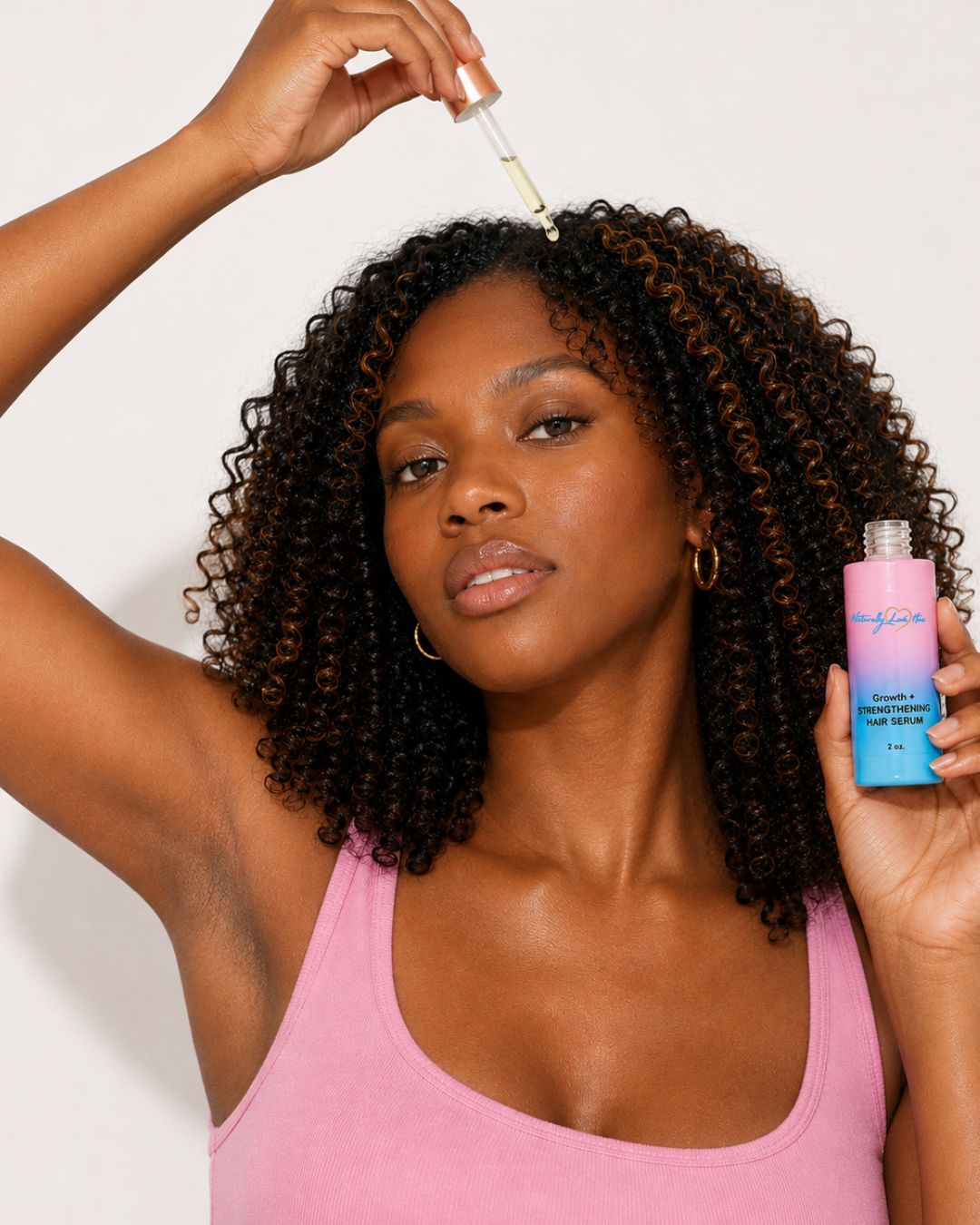
If you would rather skip the mixing step, a pre-formulated scalp product takes the guesswork out. The Growth+ Strengthening Hair Serum blends rosemary oil with caffeine extract, turmeric, avocado oil, keratin, vitamin B5, vitamin E, and peppermint oil in a lightweight, non-greasy formula, the balanced dilution we would build ourselves.

How to Moisturize 4C Hair So Oils Actually Seal It In
Oil alone does not moisturize hair, it seals moisture in, which means water goes on first. This is the step most routines get wrong.
Growth+ Strengthening Hair Serum →
- Wash or co-wash with a gentle, sulfate-free cleanser on wash day.
- Apply a leave-in conditioner to damp hair while it is still wet from the shower.
- Seal with your chosen oil, working from mid-length to ends.
- Finish with a cream or butter to lock everything in place.
- Detangle gently with a wide-tooth comb, starting at the ends.
The layering order matters more than the brands: water first, then leave-in, then oil, then cream. Our Avocado & Honey Anti-Breakage Leave-In Detangling Hair Mist is built for step two, with avocado, honey, rosemary, and aloe adding slip so detangling causes less breakage.
How Often to Oil 4C Hair (and How Much to Use)
How often to oil 4C hair depends on your scalp, styling routine, and whether you are oiling the scalp, the lengths, or both. There is no single correct number, but there are clear patterns that work for most people, and clear signs you are overdoing it.
A Practical Frequency Guide
- Scalp oiling: once or twice a week is enough for most people. If your scalp is dry, itchy, or tight, apply a light oil like jojoba or sweet almond the night before wash day. If your scalp is oily or you use heavy products, skip scalp oiling between washes.
- Length and end oiling: two to three times a week, or daily if your ends feel dry. Ends are where breakage starts, so oil them most often.
- After washing: seal with oil while hair is still damp, right after your leave-in. This is the single most effective oiling moment in a 4C routine.
People often oil too often and too heavily, then wonder why hair feels greasy or the scalp itches. If your roots look dull, your scalp feels coated, or new flakes appear, cut back to once a week and see how your hair responds.
How Much Oil to Use
Amount matters as much as frequency. More oil does not mean more moisture, past a point, it just sits on the strand and attracts dust.
- Fine 4C hair: three to five drops, warmed between your palms, for the whole head. Start smaller than you think you need.
- Medium-density 4C hair: about half a teaspoon for the lengths and ends.
- Thick, high-density 4C hair: one to two teaspoons, worked through in sections so you can feel where the oil is going.
Always oil damp hair rather than bone-dry hair. Oil on dry hair sits on top and does little; oil on damp hair locks in the water you just added. Focus on the ends first, then work upward.
Buildup, Clarifying, and When to Pause
Heavy oils, castor especially, build up over time, leaving dull, stiff hair that resists moisture or a scalp that feels coated no matter how recently you washed. Clarify with a gentle sulfate-free clarifying shampoo or diluted apple cider vinegar rinse, then restart with a lighter oil and less of it.
A few situations call for pausing oil altogether:
- Active scalp irritation, redness, or weeping: stop oiling and see a professional. Oil can trap debris and worsen some scalp conditions.
- Sudden or unusual shedding: oiling will not fix this and may mask what is happening. Get it assessed.
- Right after a chemical service or color treatment: wait until your scalp feels calm before resuming.
A scalp balm can replace loose oil when you want something richer and longer-lasting. The Scalp & Hair Balm pairs biotin, rosemary, peppermint, castor oil, honey, and vitamin E in a buttery format that nourishes the scalp and creates a protective barrier without dripping. Use it sparingly, a little goes a long way, especially on fine hair.
Safety, Patch Testing, and When to See a Professional
Patch testing is not optional, especially with essential oils. Apply a small amount to your inner wrist or behind your ear, wait 24 hours, and check for redness, itching, or swelling before using it on your scalp.
There is also a point where oils stop being the answer. According to the National Institutes of Health's overview of hair loss, some forms of hair loss have underlying medical causes that topical oils cannot address.
Conclusion: Building a 4C Hair Growth Routine That Holds Up
A 4C hair growth routine works when it protects length, not when it chases speed. Start with water and a leave-in, seal with the oil that matches your density, oil two to three times a week, and patch test anything new.
That is the approach we take at Naturally Love Hue. If you want a starting point, the Avocado & Honey 3-Piece Hair Care Set covers wash day from cleanse to leave-in for $48, and the Almond & Honey Daily Moisturizing Butter Cream seals in moisture between washes.

Frequently Asked Questions
What is the best oil for dry 4C hair?
There is no single winner, because 4C hair varies in porosity and density. For fine, easily weighed-down hair, jojoba or sweet almond oil seals moisture without heaviness. For thick, high-density 4C hair, castor oil or Jamaican black castor oil holds moisture longer but needs a lighter oil underneath. If your scalp is dry and itchy, a rosemary-infused blend applied with a scalp massage supports circulation. Match the oil to your porosity and styling routine, not to a viral recommendation.
How often should I oil my 4C hair for growth?
Scalp oiling two to three times per week suits most 4C routines. If you wash weekly, oil the scalp the night before wash day, then again mid-week. Fine hair that flattens easily should stick to once or twice weekly with a lightweight oil. Thicker hair can handle three sessions. More frequent oiling does not speed up 4C hair growth; it raises the risk of oil buildup, which clogs the scalp and causes irritation.
Can oils make 4C hair grow faster?
Oils support the conditions for healthy growth rather than speeding up the follicle itself. Genetics set your growth rate at roughly half an inch per month. Oils help by reducing breakage, soothing a dry scalp, and improving scalp circulation through massage. The visible difference comes from length retention: less breakage means more of the hair you grow stays on your head. That is why a consistent routine beats any single oil.
Should I apply oil to my scalp or my hair strands?
Both, but for different reasons. Scalp oiling with a lightweight carrier oil and a five-minute massage supports scalp health and circulation. Strand oiling seals moisture into damp hair after conditioning, which reduces breakage and split ends. Apply a few drops to the scalp and work the remainder down the length, focusing on ends. Avoid heavy layers at the roots, which flatten 4C coils and attract lint.
How do I patch-test an oil before using it on my 4C hair?
Dab a small amount of the diluted oil behind your ear or on your inner forearm. Wait 24 to 48 hours. If you see redness, itching, bumps, or swelling, do not use it on your scalp. Rosemary and peppermint oils are the most likely to irritate, so always dilute them in a carrier oil such as jojoba or sweet almond. Patch testing matters most if you have a sensitive scalp or a history of reactions to essential oils.